Hyperbaric oxygen therapy (HBOT) for dogs is an advanced, non-invasive treatment that delivers pure oxygen under pressure to support healing after injury, infection, or certain chronic conditions. Originally developed for human medicine, HBOT is now used in some veterinary settings — though it's more specialized than most other rehab therapies, with a more involved safety …

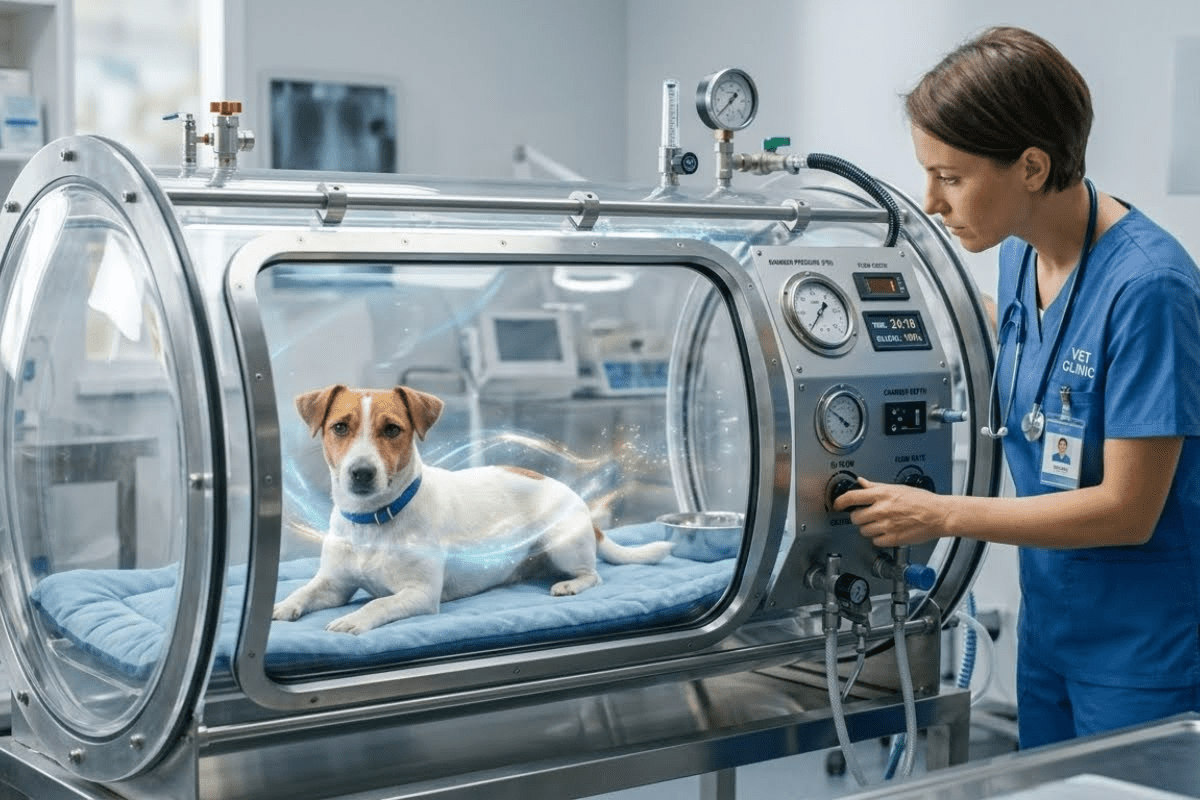
Hyperbaric oxygen therapy (HBOT) for dogs is an advanced, non-invasive treatment that delivers pure oxygen under pressure to support healing after injury, infection, or certain chronic conditions. Originally developed for human medicine, HBOT is now used in some veterinary settings — though it’s more specialized than most other rehab therapies, with a more involved safety profile that owners should understand before considering it.
How Hyperbaric Oxygen Therapy Works in Dogs
Dogs enter a sealed, pressurized chamber and breathe close to 100% oxygen at two to three times normal atmospheric pressure. Under that pressure, more oxygen dissolves directly into the blood plasma than would be possible at normal air pressure — this is basic physics (Henry’s Law), not a matter of oxygen bubbles entering circulation. That extra dissolved oxygen reaches tissue that may otherwise be oxygen-starved, particularly in areas with poor blood flow after surgery, trauma, or chronic injury.
What HBOT Is Genuinely Used to Treat
- Burn and wound healing support
- Post-surgical recovery, particularly where tissue has reduced blood supply
- Chronic, non-healing wounds (such as diabetic ulcers or pressure sores)
- Radiation-related tissue injury, in specialized oncology contexts
- As an adjunct — not a replacement — for standard treatment of certain infections, particularly ones involving low-oxygen (anaerobic) bacteria
What HBOT Isn’t: Common Misconceptions
HBOT is not an established treatment for arthritis, and shouldn’t be positioned as one. It’s also not a treatment for snake bites — antivenom and supportive veterinary care remain the actual treatment for envenomation; HBOT may occasionally be used adjunctively for tissue damage in complex cases, but it does not treat the bite itself.
Most importantly: HBOT supports the body’s own healing and immune response, and may make some infections easier to treat — it does not reduce the need for appropriate antibiotics or surgery where those are indicated. Any suggestion otherwise is a misunderstanding of how this therapy works, and could lead to an infection being under-treated.
What a Session Looks Like
Sessions typically last 45 to 90 minutes in a chamber sized appropriately for your dog, with pressure and oxygen levels adjusted to their size and condition. Chambers are designed for comfort — soft bedding, calm surroundings — and most pets tolerate sessions well, though individual animals vary, as with any enclosed-space experience.
HBOT Risks and Screening: Read This Section Carefully
HBOT is generally safe when properly administered, but it is a more medically involved therapy than laser, ultrasound, or acupuncture, and screening matters:
- Ear and sinus pressure changes are common and usually manageable, similar to altitude changes —technicians help manage this.
- Pulmonary barotrauma (pressure-related lung injury) is a real, if uncommon, risk — dogs with certain pre-existing lung conditions may not be candidates, and this should be specifically screened for, not just “lung or heart issues” in general.
- Oxygen toxicity is rare but serious, and can affect the central nervous system (including seizure risk) with prolonged or repeated high-pressure exposure — this is why session length and frequency are carefully controlled, not just a comfort consideration.
- Certain chemotherapy drugs have documented interactions with HBOT — dogs currently undergoing cancer treatment need this specifically discussed with their oncologist and the HBOT provider before starting.
- Dogs with uncontrolled seizure disorders are generally not candidates.
This is not a complete list, and it isn’t a substitute for a veterinary consultation. If HBOT is being considered for your dog, a full health screening — not just a general checkup — is appropriate before starting.
How Many HBOT Sessions Does a Dog Typically Need?
This varies significantly by condition — mild injuries may need as few as five sessions, while chronic or severe conditions may need twenty or more, with progress reassessed along the way. It’s often used alongside other rehabilitation approaches like laser therapy or acupuncture rather than as a standalone treatment.
Frequently Asked Questions
Is HBOT painful for pets?
No — most pets relax or rest through the session. Ear pressure changes are the main sensation, and technicians helpmanage this.
How soon will I see results?
Some owners notice improved wound healing within about a week, though this varies by condition and severity.
Can all pets use HBOT?
No — pets with uncontrolled seizure disorders, certain lung conditions, or specific chemotherapy regimens may notbe candidates. A full veterinary screening is necessary before starting
Are there age limits for HBOT?
Senior pets are sometimes good candidates, but age alone doesn’t determine candidacy — overall health screeningdoes.
How much does hyperbaric oxygen therapy for dogs cost?
Costs vary by clinic and by the length of the treatment course — ask for a clear estimate and a specific session-countexpectation before starting