Ultrasound therapy for dogs is a gentle, non-invasive option for helping dogs recover from injury, manage chronic joint pain, or heal soft tissue after surgery. It uses high-frequency sound waves that pass through the skin to reach muscles, joints, and soft tissue underneath — the same underlying technology as diagnostic ultrasound imaging, but used here …

Ultrasound therapy for dogs is a gentle, non-invasive option for helping dogs recover from injury, manage chronic joint pain, or heal soft tissue after surgery. It uses high-frequency sound waves that pass through the skin to reach muscles, joints, and soft tissue underneath — the same underlying technology as diagnostic ultrasound imaging, but used here for treatment rather than imaging.
The sound waves create tiny vibrations that gently warm the tissue, which improves local blood flow and helps bring oxygen and nutrients to the area. Most dogs stay calm and relaxed during treatment, and many seem to enjoy the mild warmth.
How Ultrasound Therapy Is Used on Dogs
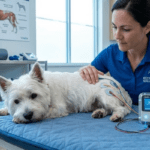
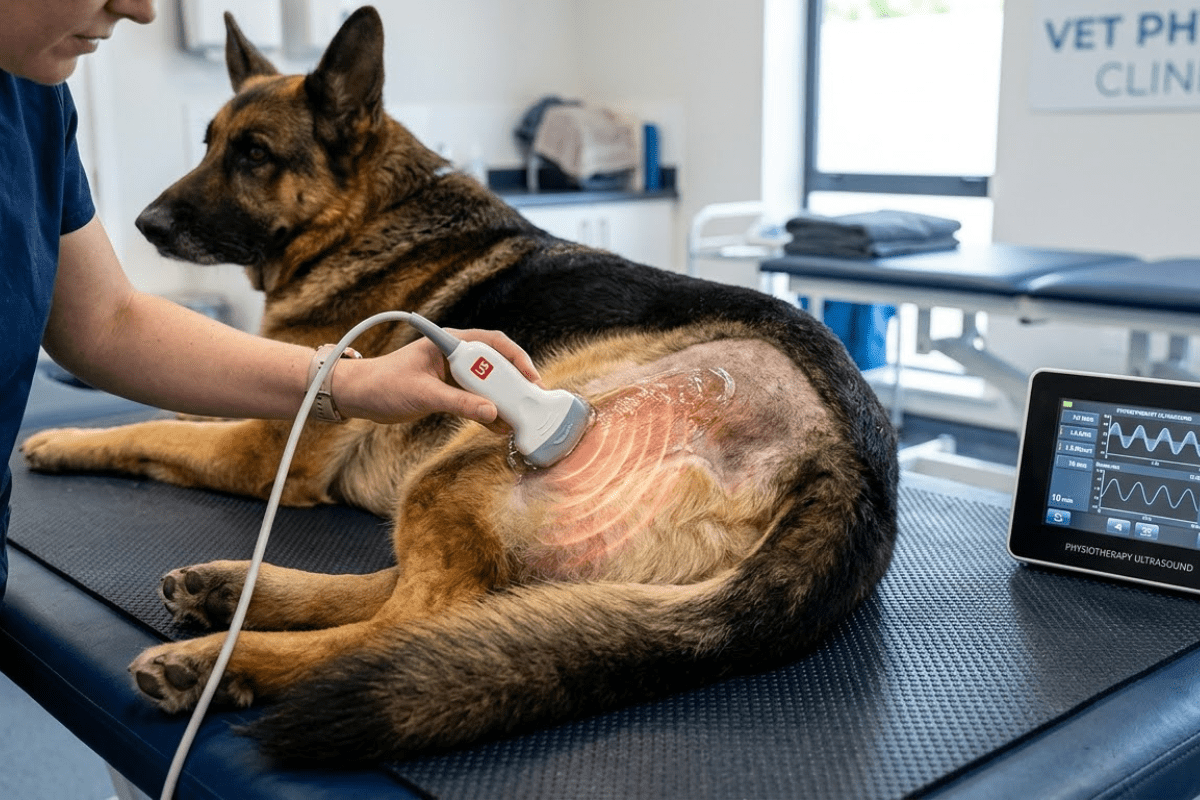
A trained therapist moves a small probe, called a transducer, over the affected area. There’s no anesthesia, no needles, and no medication involved — just the probe, a bit of gel to help the sound waves transmit cleanly, and adjustable settings based on your dog’s size and condition.
How Ultrasound Therapy Supports Healing
Increased local circulation is the main mechanism: more blood flow brings in the nutrients and oxygen tissue needs to repair itself, while also helping reduce the swelling that often makes movement painful. The gentle heat also helps relax tight muscles and ease stiffness, which is part of why dogs often move more comfortably within a few sessions.
There’s reasonable evidence that ultrasound therapy may also improve tissue extensibility over time — helping with minor scar tissue restriction and supporting better joint flexibility — though this is a more gradual effect than the immediate warmth and circulation benefits.
Conditions Ultrasound Therapy Treats in Dogs
- Muscle strains or sprains
- Joint pain from arthritis or old injuries
- Tendon or ligament injuries
- Soft tissue recovery after surgery or trauma
When Ultrasound Therapy Isn’t the Right Fit
Ultrasound therapy works well for soft tissue and inflammation, but it isn’t the right tool for bone fractures or nerve damage — your vet will help determine whether it’s actually a fit for your dog’s specific condition, and other modalities in this series may be a better match if it isn’t.
Is Ultrasound Therapy Safe for Dogs?
Ultrasound therapy is considered very safe. Some dogs may show brief, mild skin redness after a session, which typically resolves quickly. Overheating tissue is a rare risk, generally only a concern if settings are miscalibrated — uncommon with a trained therapist managing the session. Let your vet know if you notice anything unusual after treatment.
What to Expect During a Course of Treatment
Most dogs start with two to three sessions per week, with the total course adjusted based on how they respond. Sessions themselves are quick, and most dogs tolerate them easily — lying on a padded table while the therapist moves the probe slowly over the treatment area
The Bottom Line on Ultrasound Therapy for Dogs
Ultrasound therapy is a well-established, low-risk option for supporting recovery from soft tissue injury, arthritis, or post-surgical healing. It’s not a fit for every condition — bone and nerve issues need a different approach — but for the right case, it’s a genuinely useful, drug-free tool. Talk to your vet about whether it makes sense for your dog’s recovery plan.
Frequently Asked Questions
Can you use ultrasound therapy on a dog?
Yes — it’s commonly used after surgery or for muscle pain.
Is ultrasound therapy safe for cats too?
Yes, cats receive ultrasound treatment for similar joint, wound, and soft tissue concerns.
How often is ultrasound therapy needed?
Most pets start with two to three sessions per week; the total number depends on how they respond.
Are there downsides to ultrasound therapy?
It works best on muscle, tendon, and ligament issues — it isn’t effective for bone or nerve problems, and it requiresspecialized equipment and trained staff to administer.
What does ultrasound therapy for dogs cost?
Costs vary by clinic and region — ask for a clear estimate before starting a course of treatment.