If your dog is limping, slow to get up, or seems sore after activity, it's worth knowing about extracorporeal shockwave therapy (ESWT) as an option. It's non-invasive, doesn't require anesthesia, and works by sending focused acoustic energy into the injured area from outside the body to support the body's own healing response. What Extracorporeal Shockwave …

If your dog is limping, slow to get up, or seems sore after activity, it’s worth knowing about extracorporeal shockwave therapy (ESWT) as an option. It’s non-invasive, doesn’t require anesthesia, and works by sending focused acoustic energy into the injured area from outside the body to support the body’s own healing response.
What Extracorporeal Shockwave Therapy Actually Is
“Extracorporeal” just means “outside the body.” A shockwave device generates rapid bursts of acoustic energy, and a handpiece directs them at the injury site, passing through skin and muscle to reach the tissue underneath.
How Shockwave Therapy Works
The device builds pressure mechanically or electromagnetically and releases it rapidly, producing a wave. Gel on the skin helps that energy transfer efficiently. Shockwave reaches deeper tissue than ultrasound or laser therapy, and it’s one of the few modalities that can meaningfully stimulate bone cell activity — which is why it’s sometimes used for slow-healing fractures, not just soft tissue.
The Mechanisms Behind Shockwave Therapy, in Plain Terms
Pain Gating
The waves flood the treated area with non-painful sensory input, which competes with pain signals for the nervous system’s attention — similar to why rubbing a bumped elbow takes some of the sting out of it. This can let muscles relax and joints move more freely while the underlying tissue continues healing.
Cavitation
As the waves pass through tissue fluid, they create and collapse microscopic bubbles. That mechanical disturbance appears to stimulate nearby cells into a more active repair state.
Blood Flow
Shockwave also encourages existing blood vessels to open and can promote some new vessel growth, which brings more oxygen and repair-supporting nutrients to the area while helping clear swelling and cellular debris.
Conditions Shockwave Therapy Treats in Dogs
- Joint conditions — hip dysplasia, elbow issues, general stiffness
- Soft-tissue injuries — tendons and ligaments healing out of alignment
- Slow-healing (non-union) fractures — a more specialized use, not routine first-line care
- Chronic wounds — improved local blood flow can support stubborn healing
- Chronic back pain — results vary quite a bit by dog, so it’s worth discussing realistic expectations withyour vet rather than assuming a fixed timeline
What a Shockwave Therapy Session Looks Like
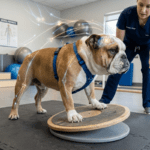
We start with a movement evaluation — watching your dog walk, sit, turn, lie down — and gentle palpation to find sore spots. If something needs a closer look, we might use low-dose X-rays or ultrasound before building a treatment plan specific to your dog.
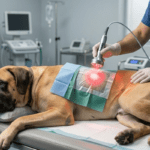
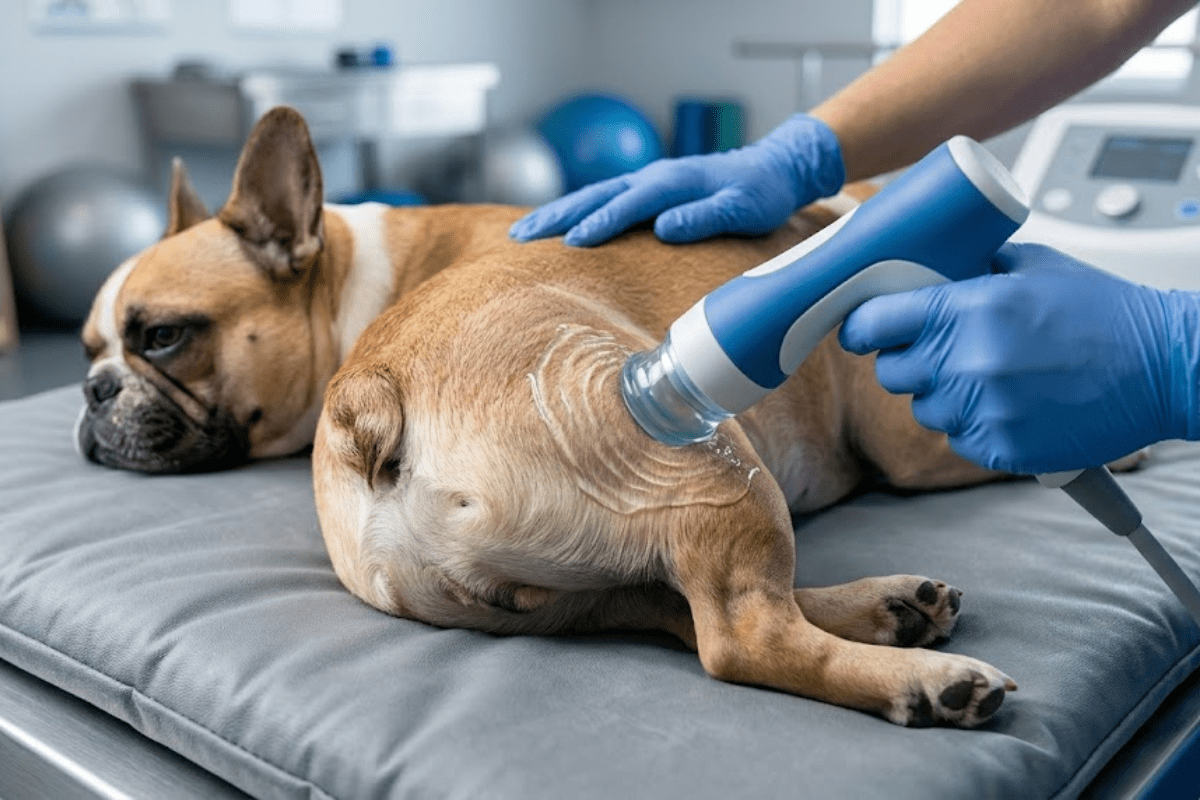
During treatment, your dog rests on a padded mat in a quiet room. We may trim a small patch of fur, apply cooling gel, and deliver the treatment in rhythmic pulses — most sessions run about 30 minutes, and a lot of dogs relax or nap through it. Afterward, we recommend light activity only for the rest of the day, gentle leash walks starting day two, and some simple at-home stretches.
Safety and When We Don’t Use Shockwave Therapy
Some dogs get mild, short-lived skin pinkness, or next-day tenderness similar to post-workout soreness. Serious complications are uncommon in trained hands, but shockwave isn’t used indiscriminately — we avoid it over tumors, the lungs, and active infections, hold off until growth plates have closed in young dogs, and take a more conservative approach with pregnant dogs. Your vet will walk through your dog’s specific health history before recommending it.
How Shockwave Therapy Compares to Other Options
Compared to surgery, it requires no anesthesia or incisions and comes with minimal downtime — it won’t replace surgery for severe damage, but it can delay or sometimes avoid it in milder cases. Compared to long-term pain medication, it offers relief without added strain on the stomach, liver, or kidneys. It’s often paired with laser therapy, acupuncture, or hydrotherapy as part of a broader rehab plan rather than used alone.
How Many Shockwave Sessions Does a Dog Typically Need?
It depends on the condition. As a general guide: a fresh muscle strain might need as few as two sessions about a week apart, long-standing arthritis often benefits from three to four sessions over a month, and a slow-healing fracture may need a longer course — sometimes up to six sessions over two months. Your vet will adjust this based on how your dog actually responds, not a fixed formula.
The Bottom Line on Shockwave Therapy for Dogs
ESWT isn’t a cure-all, and results vary by dog and condition, but it’s a well-established, low-downtime option worth discussing with your veterinarian for joint pain, soft-tissue injury, slow-healing bone, or chronic back discomfort.
Frequently Asked Questions
Will my dog feel pain during ESWT?
Most dogs feel light tapping rather than pain, and many stay calm throughout. Mild sedation is available for nervousdogs if needed.
How soon will I see results from shockwave therapy?
Some dogs show improvement within days; others take one to two weeks. It varies.
Can shockwave therapy replace surgery?
Sometimes, for mild or early cases. Severe damage may still need surgery — your vet can help you weigh theoptions.
Is shockwave therapy safe for small breeds or seniors?
Yes — power is adjusted for size and health status. Seniors are often good candidates since it doesn’t add strain tothe liver or kidneys the way some medications can.
Does pet insurance cover shockwave therapy?
Many plans cover rehab therapies like ESWT. Worth bringing your policy in so our team can check.