Recovering from surgery is hard on a dog's body — they're tired, sore, and slower to move than usual for weeks at a time. Laser therapy for dogs is one option worth knowing about: it's non-invasive, doesn't require sedation, and uses focused light to support the body's own healing process rather than masking pain with …

Recovering from surgery is hard on a dog’s body — they’re tired, sore, and slower to move than usual for weeks at a time. Laser therapy for dogs is one option worth knowing about: it’s non-invasive, doesn’t require sedation, and uses focused light to support the body’s own healing process rather than masking pain with medication.
What Class 4 Laser Therapy Is
Class 4 lasers are higher-powered than the lower-class lasers used in some settings, which lets the light reach deeper tissue layers — muscles, tendons, joints, and nerves — rather than just the skin surface. That deeper reach is why they’re commonly used for tougher, longer-term issues like arthritis or deep muscle injury, not just surface wounds.
Sessions are also fairly quick as a result — typically 5 to 20 minutes — which matters for pets that get anxious or restless during longer treatments.
How Laser Therapy Works
Laser light at the right wavelength is absorbed by cells and appears to boost ATP production — essentially, cellular energy — which supports faster tissue repair and wound healing. It also promotes some vasodilation, increasing blood flow to the area, which brings oxygen and nutrients in while helping clear inflammatory byproducts out.
The pain-relief effect comes mostly from reduced inflammation and changes in nerve signaling at the treated site, rather than the endorphin-release mechanism more associated with acupuncture or electrical stimulation.
Conditions Laser Therapy Treats in Dogs
- Arthritis — many older dogs move more comfortably after a course of sessions
- Sprains and strains — supports faster soft-tissue healing and may reduce re-injury risk
- Tendonitis — helps reduce inflammation without added mechanical stress on the tendon
- Post-surgical wounds — can support faster tissue closure, which may indirectly reduce infection risk, though it isn’t a substitute for proper wound care
- Nerve injury support — an area of ongoing research; laser is used adjunctively in some nerve-recovery cases, though this is a more specialized and less established application than the musculoskeletal uses above
- Skin conditions — hot spots, rashes, and dermatitis often respond well, partly by supporting skin healing and reducing the itch-scratch cycle that slows recovery
What a Laser Therapy Session Looks Like
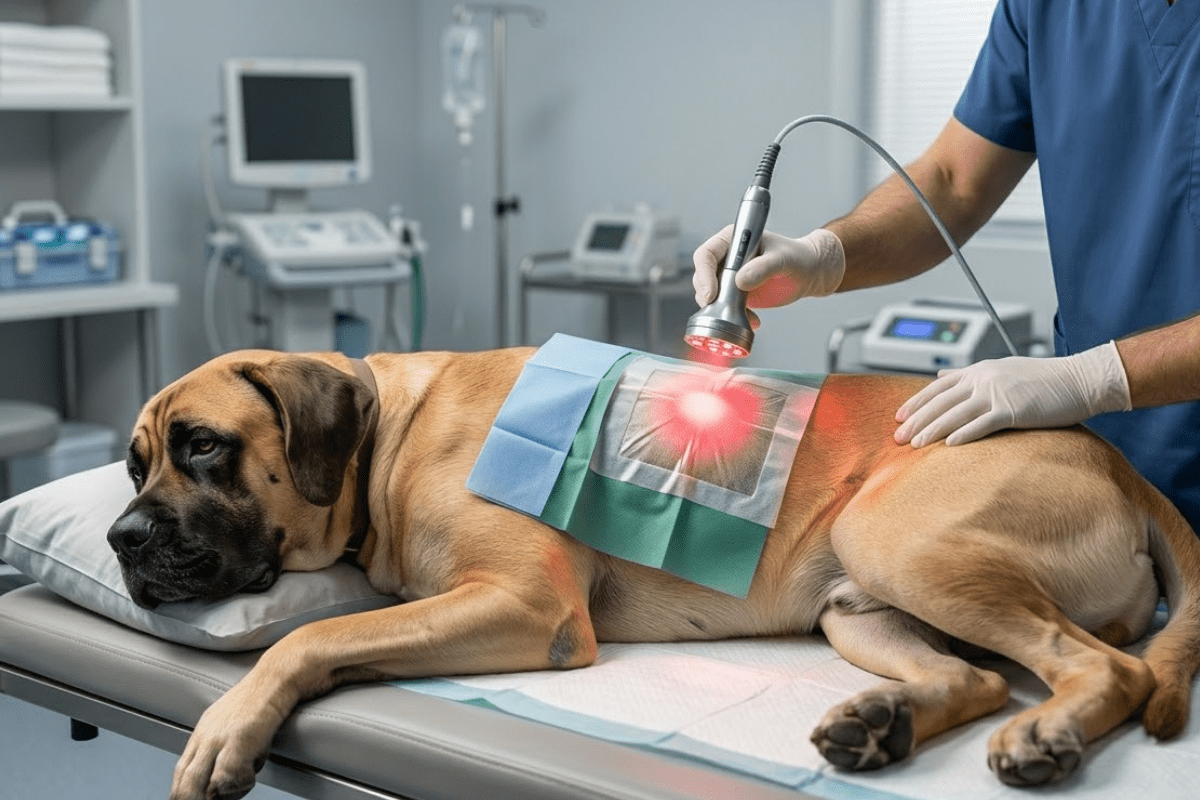
The first visit starts with a review of your dog’s medical history and a physical exam to determine the right laser settings and treatment area. During the session, the vet moves the laser slowly over the area — most dogs stay calm and many relax noticeably as the light warms the tissue. Both your dog and the treating staff wear protective eyewear during treatment, a standard safety precaution given the intensity of Class 4 lasers.
Most dogs need 3 to 8 sessions total for full results, though some show improvement after just one. Your vet will suggest a schedule based on your dog’s specific condition and adjust it as your dog responds.
Is Laser Therapy Safe for Dogs?
Laser therapy doesn’t require sedation, needles, or medication, which makes it a low-risk option for most dogs. Mild, temporary tiredness after the first session is common and generally resolves within a day. As with any modality, your vet will confirm your dog is a good candidate based on their specific health history.
The Bottom Line on Laser Therapy for Dogs
Laser therapy is a well-supported, low-risk option for supporting recovery from surgery, arthritis, and soft-tissue injury. It won’t replace medication or surgery in every case, but it’s often used to reduce reliance on both, and it pairs well with other rehab approaches like shockwave therapy or hydrotherapy as part of a broader recovery plan.
Frequently Asked Questions
Is laser therapy safe for dogs?
Yes, when performed by trained staff. It’s non-invasive, doesn’t require anesthesia, and most dogs feel only mildwarmth during treatment.
How soon will I see results from laser therapy?
Some dogs feel better after one session; others take two to three sessions before changes are clear
Can laser therapy replace medication?
It may reduce the need for pain or anti-inflammatory medication in some cases, but that’s a decision for your vetbased on your dog’s specific situation — not a guaranteed substitute.
Does my dog need to be shaved before laser therapy?
Usually not — the laser works through most coats. Very thick coats or larger wounds may occasionally need a smalltrim for better contact
Are there side effects of laser therapy for dogs?
They’re rare. Some dogs seem a bit more tired the day of treatment as the body responds — this is normal andtypically resolves within a day.