When your dog's allergies just won't quit, it can affect their comfort and quality of life. Dogs canexperience itchy skin, redness, and recurring infections just like humans deal with chronic allergysymptoms. This is where Chinese herbal medicine for dogs can play a helpful role. These remedies work alongside standard allergy care to support calmer, healthier …

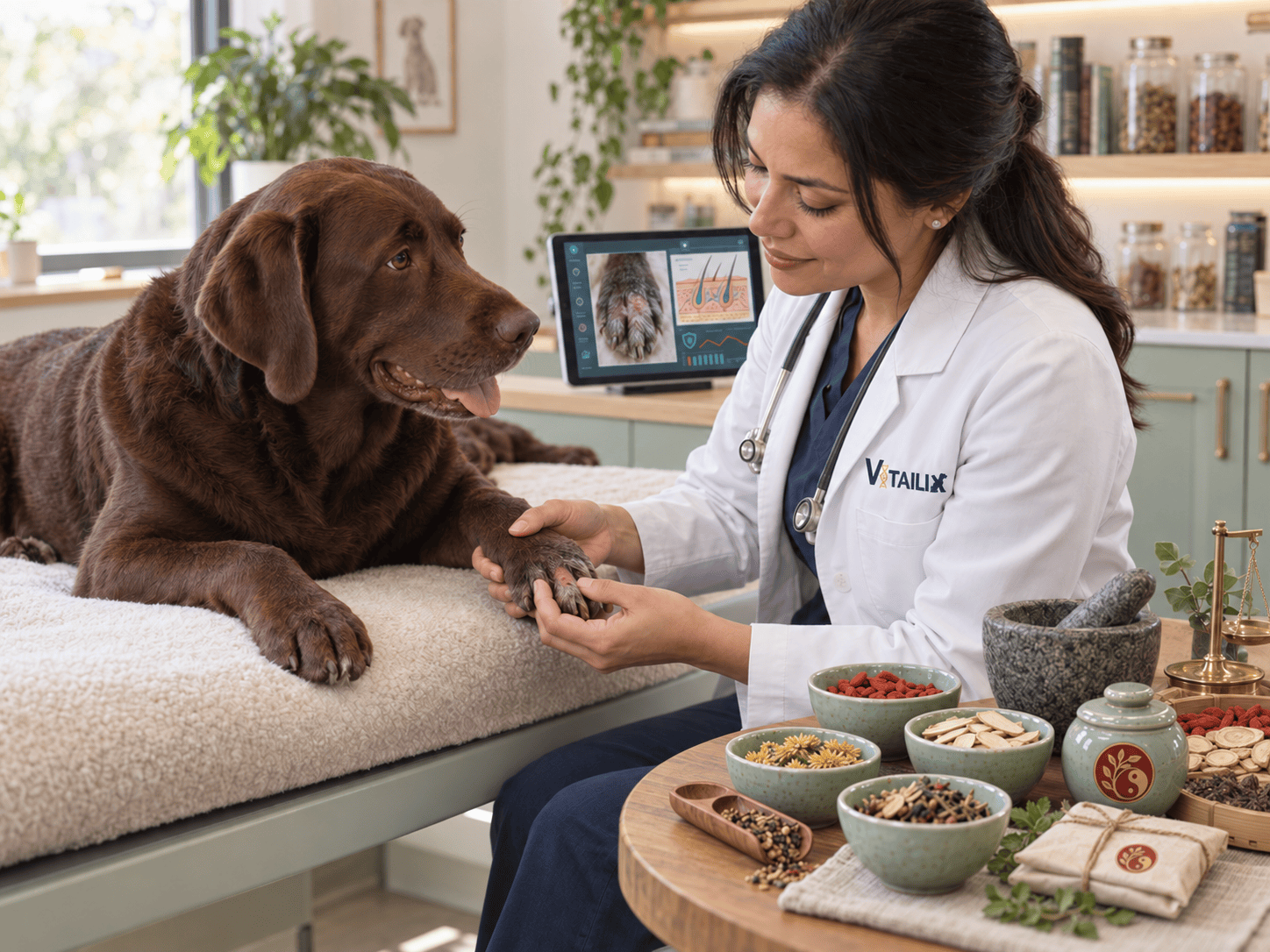
When your dog’s allergies just won’t quit, it can affect their comfort and quality of life. Dogs can
experience itchy skin, redness, and recurring infections just like humans deal with chronic allergy
symptoms. This is where Chinese herbal medicine for dogs can play a helpful role. These remedies work alongside standard allergy care to support calmer, healthier skin. If your dog has ongoing allergy symptoms despite the usual treatments, herbal support can bring relief safely and gently.
Before starting any new treatment, it’s essential to talk to your veterinarian. They will guide you on the best options based on your dog’s diagnosis, health history, and individual needs. With the right care, your dog can enjoy calmer skin and fewer flare-ups. In this blog, you will explore how Chinese herbal medicine can support dogs with allergies and what the research actually shows.
Why Use Chinese Herbal Medicine for Allergies?
Many pet owners look for additional support when their dog’s allergy symptoms persist despite
medicated shampoos, prescription medications, and diet changes. Chronic itching, licking, and skin inflammation can be exhausting for dogs and owners alike, and it’s natural to want more tools in the toolkit.
Chinese herbal formulas work by supporting the body’s response to allergens through targeted,
condition-specific blends rather than a one-size-fits-all approach. Because atopic dermatitis is a lifelong management condition for most dogs, owners often look for options that can be used consistently alongside their dog’s existing routine, without the side effects that can come with long-term use of some medications.
Common Herbal Options for Canine Allergies
Several herbal formulas have been studied specifically for skin and allergy support in dogs:
- Dihuang Guiqin capsule is a formula that has been directly compared to standard prescription itch medication in controlled research, with promising results for itch and skin-lesion improvement.
- P07P is an earlier-studied herbal blend that showed some improvement in dogs with atopic
dermatitis, though results were less definitive than more recent research. - Broader TCVM allergy formulas may combine several herbs selected to address your dog’s
specific skin pattern, chosen by a veterinarian based on individual diagnosis.
Choosing the right formula depends on your dog’s specific allergy presentation and history. Your vet can recommend a safe, appropriate product and dosing plan.
How to Use Herbal Allergy Support Safely
Natural does not always mean risk-free, especially for a condition as chronic as allergies. Using these remedies correctly ensures your dog benefits fully. First, never start an herbal formula without consulting your veterinarian, especially since allergy symptoms can have multiple underlying causes that need to be ruled out first.
Confirm your dog’s diagnosis is current before adding anything new — parasites, infections, and food sensitivities can all mimic environmental allergies and need to be addressed directly. Begin with the dose and formula your vet recommends, and keep a simple log of your dog’s skin and itch levels to track any changes.
Watch for any digestive upset or unexpected reactions, and follow product instructions carefully. Don’t stop current allergy medications on your own if you add an herbal formula — any combination should be managed by your vet to avoid unwanted interactions.
When to Consider Herbal Support for Your Dog’s Allergies
Herbal support isn’t necessary for every allergy case, but it can be genuinely helpful in the right
situations. If your dog’s allergy symptoms have been resistant to standard management, herbal formulas may be worth discussing with your vet.
You might consider herbal allergy support if your dog:
- Continues to show itching, redness, or skin irritation despite standard treatment.
- Has recurring ear or paw infections tied to underlying allergies.
- Experiences side effects from long-term use of standard allergy medications.
- Has a confirmed diagnosis of atopic dermatitis and you’re looking for additional, evidence-
informed options. - Is a good candidate based on your vet’s assessment of their overall health and current medications.
Using herbal support thoughtfully can add another layer to your dog’s allergy management plan.
Remember, it works best alongside — not instead of — an accurate diagnosis and ongoing veterinary care.
Supporting Skin Health with Routine and Environment
Herbal formulas are most effective when combined with other allergy-management strategies. You can help your dog’s skin health by maintaining a consistent bathing schedule with vet-recommended, gentle products. Reducing exposure to known environmental triggers, when possible, also makes a meaningful difference.
A high-quality, consistent diet supports overall skin barrier health, and omega-3 supplementation is often recommended alongside herbal support for its anti-inflammatory benefits. Regular grooming and coat checks help you catch flare-ups early, before they become more serious.
Stress can also worsen skin conditions in some dogs, so a calm routine and predictable environment support your dog’s overall resilience, working alongside whatever herbal or medical treatment your vet recommends.
When to Avoid Herbal Allergy Support Without Vet Approval
Even herbal remedies aren’t suitable for every dog or every situation. If your dog has an undiagnosed skin condition, liver or kidney concerns, or is currently on multiple medications, herbal formulas should never be started without direct veterinary guidance.
Skin symptoms can sometimes signal something more serious than environmental allergies, including infections that need targeted treatment or, rarely, other underlying conditions. Always have persistent or worsening skin symptoms evaluated by your vet before assuming it’s a simple allergy that herbal support alone can manage.
Never substitute herbal support for prescribed medication without your vet’s guidance, and always disclose every product your dog is receiving, even ones that seem purely natural.
Final Thoughts
Chinese herbal medicine offers a genuinely evidence-informed option for dogs struggling with chronic allergy symptoms, with some formulas showing results comparable to standard prescription treatment in controlled research. Used thoughtfully, alongside an accurate diagnosis and your veterinarian’s guidance, it can be a valuable addition to your dog’s allergy management plan. Your vet is your best partner in determining whether herbal support is right for your dog and in choosing the safest, most effective option.
Help your dog find lasting relief from allergies with evidence-informed, vet-guided solutions from The Biohacked Dog. Visit The Biohacked Dog today to explore trusted options for your dog’s skin and wellness.
Frequently Asked Questions
What is Chinese herbal medicine for dog allergies?
It’s the use of specific TCVM-formulated herbal blends, prescribed by a veterinarian, to support dogswith chronic allergy symptoms like itching and skin inflammation.
Is herbal allergy support safe for all dogs?
Most formulas are safe when properly diagnosed and vet-guided, but always consult your veterinarianbefore starting, especially if your dog is on other medications.
How long does it take for herbal allergy support to work?
Results vary by formula; some studies have shown improvement within several weeks of consistent use.
Can herbal support replace my dog's current allergy medication?
Not without veterinary guidance. Herbal formulas are best used alongside standard care, and anychanges to medication should be managed by your vet.
What's the strongest evidence for herbal allergy treatment in dogs?
A controlled clinical trial comparing the Dihuang Guiqin capsule to a standard prescription itchmedication showed comparable improvement in itch and lesion scores.